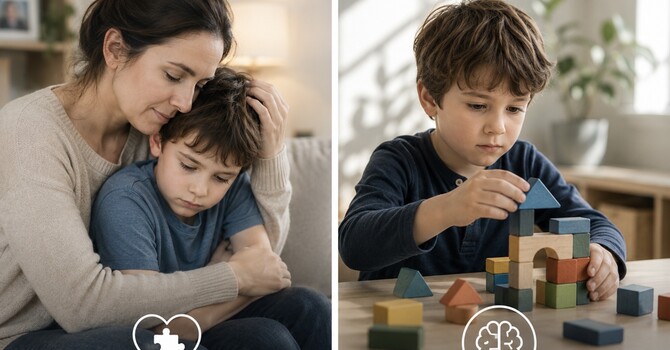
The start of a new year is supposed to feel hopeful. Fresh. Motivating.
And yet, for so many people, January arrives with a quiet undercurrent of anxiety. If that’s you, you’re not broken...and you’re certainly not alone.
Every year around this time, we see a noticeable rise in stress, worry, sleep issues, and that nagging sense of “I should feel better than I do.” The truth is, the new year doesn’t magically reset our nervous systems. If anything, it often puts more pressure on them.
Before we go any further, let me say this clearly: nothing has gone wrong. What you’re feeling makes sense. And, it’s workable. Support is available, and you don’t have to figure this out on your own. If you’re ready to take the next step, you can schedule a FREE consultation.
Click here for your FREE consultation
___________________________________
The Hidden Psychology of New Year Anxiety
New Year anxiety isn’t just about goals or resolutions. It’s about transition, and the human brain is notoriously sensitive to change...even positive change.
Here’s what’s often happening beneath the surface:
-
Unfinished emotional business from the past year
-
Heightened self-evaluation (“Am I where I should be?”)
-
Pressure to improve quickly
-
Fear of repeating old patterns
-
A mismatch between expectations and reality
Our brains crave predictability. When a new year arrives, it disrupts the familiar...even when we’re excited. That disruption can activate the stress response before we consciously realize what’s happening. This is why people who appear “high-functioning” on the outside often struggle the most internally. They’re carrying responsibility, ambition, and emotional load...quietly.
Why “Just Think Positive” Doesn’t Work
You’ve probably been told to “stay positive,” “focus on gratitude,” or “set better goals.”
Those ideas aren’t wrong...but they’re incomplete.
An anxious nervous system doesn’t respond to logic alone. It responds to felt safety. Until the body senses stability, no amount of positive thinking will fully land.
That’s why people can intellectually understand what they should do and still feel stuck. True resilience isn’t about forcing optimism. It’s about regulating your internal state first, then making thoughtful choices from a calmer place.
Emotional Resilience: What It Really Means
Resilience isn’t about being unshakeable. It’s about being recoverable.
Emotionally resilient people:
-
Notice stress earlier
-
Respond instead of react
-
Recover faster after hard moments
-
Make decisions from clarity rather than urgency
This is not a personality trait; it’s a skill set. And skills can be learned.
________________________________________________________
How to Start Calming New Year Anxiety (Without Overhauling Your Life)
Let’s simplify this. You don’t need a dramatic reset. You need consistent nervous-system support.
Here are evidence-based ways to start:
1. Shift from “Big Goals” to “Stabilizing Anchors”
Instead of asking, “What do I need to accomplish?” Try asking, “What helps me feel steady?”
Anchors might include:
-
A consistent wake-up routine
-
Gentle movement
-
A daily grounding practice
-
Reduced evening screen time
Stability comes before growth—not after.
2. Name the Pressure Instead of Fighting It
Anxiety thrives in silence. Simply acknowledging, “This time of year is hard for me,” can reduce internal tension. There is power in naming what’s real.
3. Focus on Regulation, Not Motivation
Motivation fluctuates. Regulation is foundational.
Breathing practices, body-based interventions, and therapies that calm the nervous system help reduce anxiety at its root—not just manage symptoms.
This is where professional support can be incredibly effective.
If you’re curious what that could look like for you, you can start with a free consultation here:
Click here to schedule your FREE Consult
__________________________________________
When Anxiety Becomes a Signal—not a Problem
Anxiety is not a personal failure. It’s feedback.
It often signals:
-
Emotional overload
-
A nervous system stuck in high alert
-
Unprocessed stress
-
A need for better boundaries or support
Ignoring the signal doesn’t make it disappear. Listening to it—compassionately—creates change.
What Support Actually Looks Like (and What It Doesn’t)
Support doesn’t mean:
-
Reliving every painful memory
-
Being judged or “fixed”
-
Being told what you should feel
Support does mean:
-
Understanding how your nervous system works
-
Learning tools that actually calm your body
-
Gaining insight without overwhelm
-
Feeling steadier in your day-to-day life
For many people, anxiety has been managed for years...but never truly addressed. That can change.
_________________________________________________
A Different Way to Think About the Year Ahead
Instead of asking:
-
“How do I become better this year?”
Try asking:
-
“How do I feel safer in my own body?”
-
“What would help me feel more grounded?”
-
“What kind of support would I benefit from now—not later?”
This shift alone can reduce pressure and create momentum.
_________________________________________________
You Don’t Have to White-Knuckle Another Year
If anxiety has been quietly shaping your days...interrupting sleep, focus, relationships, or joy...it’s worth addressing. Not because something is wrong with you, but because your nervous system deserves care.
The start of a new year isn’t a test. It’s an invitation.
An invitation to do things differently.
An invitation to stop carrying it alone.
An invitation to build resilience that lasts.
_________________________________________________
If you’re ready to explore support that feels grounded, respectful, and effective, we’re here. You can schedule a free consultation at:
Click HERE for a free consultation
Calm isn’t something you earn. It’s something you can learn to experience...again & again. And that, my friend, is a powerful way to begin 2026.