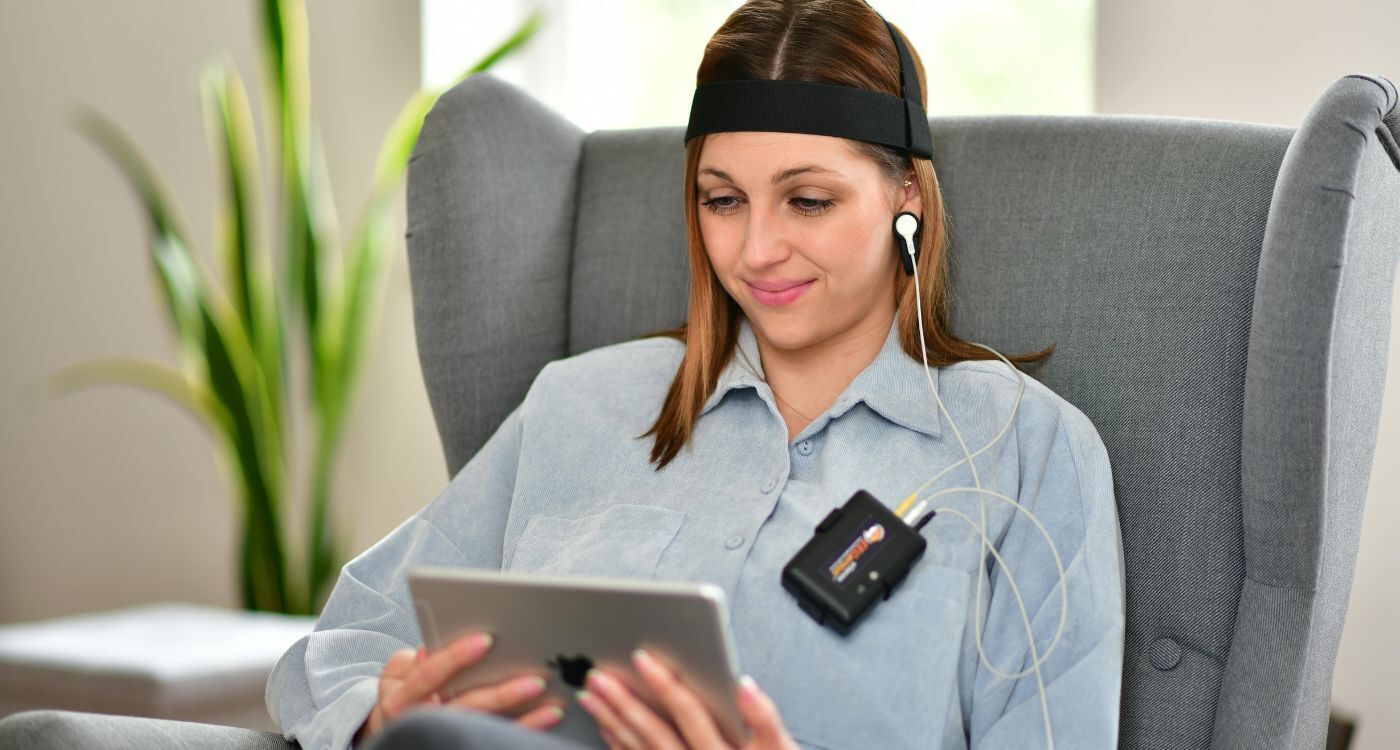
If you've ever wished there was a way to help your brain work with you instead of against you, neurofeedback therapy might be exactly what you're looking for. It's not a new concept researchers have been studying it since the 1960s; but it's become increasingly accessible, and the science behind it has grown significantly in recent decades.
At K-Counseling & Anxiety Treatment in Boise, neurofeedback is one of the tools we're most excited about. It's a core part of our Zen Den suite, alongside Alpha-Stim® and red light therapy, because we believe the best mental health care goes beyond talk therapy alone. Here's what you need to know.
So, What Exactly Is Neurofeedback?
Neurofeedback therapy is a non-invasive, drug-free form of brain training that uses real-time feedback to help your brain regulate itself more effectively. It falls under the broader umbrella of biofeedback, but instead of measuring muscle tension or heart rate, neurofeedback focuses specifically on your brainwave activity.
During a session, small sensors are placed on your scalp (nothing penetrating just comfortable electrodes). These sensors pick up your brain's electrical activity and send it to a computer, which translates it into a visual display or audio signal. When your brain produces healthy, calm patterns, you get positive feedback...usually something as simple as a video playing smoothly or a tone chiming. When it drifts into less regulated patterns, the feedback pauses.
Over time, your brain learns. It begins to favor the more regulated patterns on its own, even outside of sessions. This process is called operant conditioning, and it's the same fundamental learning mechanism behind many other well-established therapies.
Why Does Brainwave Regulation Matter?
Your brain communicates through electrical frequencies: different patterns for different states. Delta waves dominate during deep sleep, theta during drowsiness or creative flow, alpha during calm wakefulness, and beta during focused attention. When these patterns are disrupted or imbalanced, it often shows up as symptoms: anxiety, racing thoughts, difficulty concentrating, emotional reactivity, or poor sleep.
For people with anxiety, the brain is often stuck in a state of high-frequency, high-intensity activation, like a car engine that won't idle down. For those with ADHD, there's frequently an excess of slow-wave activity in areas of the brain responsible for attention and impulse control. Neurofeedback works by gently nudging these patterns back toward balance.
Neurofeedback for Anxiety
Anxiety is one of the most well-studied applications for neurofeedback therapy. Research published in journals like Applied Psychophysiology and Biofeedback has found meaningful improvements in anxiety symptoms following neurofeedback training, particularly for generalized anxiety disorder and panic-related conditions.
What makes this especially relevant for clients at K-Counseling is that many people seeking therapy for anxiety have already tried traditional approaches or they're looking for something that complements CBT or other talk-based methods. Neurofeedback works particularly well as an add-on: it addresses the physiological patterns underlying anxiety while therapy addresses the thoughts, beliefs, and behaviors that reinforce it.
If you're navigating anxiety whether that looks like constant worry, panic attacks, OCD, or phobias our neurofeedback services can be tailored to what you're experiencing.
Neurofeedback for ADHD
ADHD neurofeedback therapy has a substantial research base behind it. A 2019 meta-analysis in European Child & Adolescent Psychiatry found that neurofeedback produced significant improvements in inattention and hyperactivity, with effects that were maintained at follow-up assessments.
For kids and adults with ADHD, the brain often shows an excess of theta waves (associated with daydreaming and low alertness) and insufficient beta wave activity (associated with active concentration) in the frontal regions. Neurofeedback protocols for ADHD typically aim to reduce this theta/beta ratio; in effect, training the brain to stay more alert and focused on demand.
This is one reason we're particularly enthusiastic about offering this at our Boise location. Many families have tried medication, behavioral strategies, or both; and neurofeedback gives them something to add to the toolkit that's non-pharmacological and measurable. You can read more about our specific approach on our neurofeedback for ADHD page.
Neurofeedback for Trauma & OCD
The benefits of neurofeedback therapy extend well beyond anxiety and ADHD. It's increasingly used alongside EMDR and other trauma-focused treatments because dysregulation of the nervous system is central to how trauma gets "stuck" in the body and brain.
For OCD, neurofeedback can help address the hyperactive feedback loops in the brain that fuel intrusive thoughts and compulsive behaviors; a meaningful complement to the ERP (Exposure and Response Prevention) techniques used in evidence-based OCD treatment.
Our neurofeedback for trauma page and neurofeedback for OCD page go deeper into each of these applications if you'd like to explore further.
What Does a Neurofeedback Session Look Like?
A typical session at K-Counseling lasts around 30 to 60 minutes. You'll sit comfortably while the sensors are applied most clients describe it as relaxing. You'll watch a screen or listen to audio, and the system does the work of detecting and feeding back your brainwave activity in real time.
Most people don't feel anything unusual during a session. Some report feeling calmer or more focused afterward, especially as they progress through a series of sessions. A typical course of neurofeedback training involves 20 to 40 sessions, though some people notice changes sooner.
It's worth noting: neurofeedback isn't a standalone cure, and it works best as part of a broader treatment plan. At K-Counseling, it's always offered alongside therapy; not instead of it.
Is Neurofeedback Right for You?
Neurofeedback therapy is generally considered safe and well-tolerated. It's appropriate for children as young as 5 and adults of any age, and it doesn't involve medication. That said, it's not the right fit for everyone, and a thorough intake process matters.
If you're in the Boise area and curious whether neurofeedback might be a good addition to your mental health care, the best place to start is a free consultation with our team. We'll take the time to understand your history, your goals, and what combination of approaches, from neurofeedback to EMDR to CBT and beyond, makes sense for you.
Reach out today to schedule your free consultation with K-Counseling & Anxiety Treatment. We're here to help you find what works.
Lisa Schiro
Contact Me