Have you ever overreacted to an situation, a peson or a conversation and thought, “Where in the world did *THAT* come from?” Maybe your friend made a benign statement, and suddenly you felt a strong defensive reaction. Your manager questioned your work progress, and your stomach clunched. Someone raised their voice, and before you knew it, your heart was racing and you were on guard in a split second. Here’s a question worth considering: What if your reaction has less to do with what’s happening today and more to do with something that happened years ago? At K-Counseling & Anxiety Treatment in Boise, Idaho, we help people understand these patterns and learn how to challenge and replace old patterns so you can be free of past traumas. If this sounds familiar, you can schedule a FREE consultation. Because here’s something I believe strongly: Your past may explain your reactions, but it doesn’t have to control your future.
Seriously, Who Gets Through Life Without Some Trauma?
Think about it. Who gets through life without being hurt, disappointed, frightened, rejected, abandoned or betrayed at some point? Life happens. Relationships get REALLY messy at times. Parents make mistakes. People die. Kids get bullied. Marriages struggle. People we love leave us. Sometimes terrible things happen that we never saw coming.
Not every painful experience creates lasting trauma. However, some tough life experiences leave a mark on how our brains and nervous systems respond to the world. And, those marks aren’t always visabel.
When people hear the word "TRAUMA", they often imagine something catastrophic. A terrible automobile accident. Violence. Abuse...basically, a life-threatening event. Certainly, those experiences can lead to post-traumatic stress disorder (PTSD). But other painful experiences, especially when they happen repeatedly, can also shape how we see ourselves, other people, and the world around us.
Maybe you grew up with a parent whose mood could change in an instant. You learned to read a room before saying anything. Perhaps you were constantly criticized, so you became a perfectionist. Maybe someone you depended on repeatedly let you down, and now trusting people feels risky.
Here’s what’s fascinating: The behaviors you developed to protect yourself years ago may be the very behaviors making your life difficult today. You might not even recognize the connection.
Your Brain Says You’re Safe. Your Body Says, “NOT SO FAST!”
Imagine having a smoke detector in your kitchen that goes off every time you make toast. There’s no fire. There’s no emergency. But the alarm is screaming as though the house is going down in flames. It's a signal. Learning to decipher between noise & signals takes time and creation of a different habit to your environment.
That’s a pretty good illustration of what can happen when the nervous system becomes overly sensitive to perceived threats (noise).
Your brain is designed to help you survive. It is constantly scanning your environment for danger, often without your conscious awareness. When you’ve experienced something frightening or overwhelming, your brain may become especially alert to anything that comes close to that original event. And resemblance is not always logical. A particular voice. Someone walking away during an argument. A disappointed expression. A familiar smell. Even silence...or an unexpected break up.
Suddenly, your body reacts. Your muscles tighten. Your breathing changes. Your heart speeds up. You feel angry, frightened, ashamed, or desperate to escape. Then your thinking brain jumps in and tries to explain what you’re feeling.
“They’re upset with me.”
“I’m going to be rejected.”
“Something awful is going to happen.”
“I need to flee NOW!”
But what if none of those conclusions is accurate? What if your nervous system sounded the alarm first, and your brain simply attached a story to explain it? This is one reason trauma-related reactions can be so confusing. You may intellectually know you’re safe, yet your body responds as though danger is right around the corner. And, when that happens repeatedly, it can begin shaping your relationships, decisions, and everyday life.
Trauma Doesn’t Always Look Like Trauma
Here’s where I think people miss the boat. Trauma-related difficulties don’t always look like nightmares, flashbacks, death, or obvious fear. Sometimes they look like everyday personality traits or habits we’ve accepted as a normal existence.
Maybe you’re the person who apologizes constantly, even when you’ve done nothing wrong. Perhaps you avoid conflict because the thought of someone being upset with you feels unbearable. Or, you go to great extremes to avoid conflict. You might be fiercely independent because relying on other people has never felt safe. Some people become people-pleasers. Others become controlling. Some withdraw emotionally, while others become unusually sensitive to criticism or rejection. And, let’s not forget those who overthink everything.
You replay conversations in your head. You wonder whether you said the wrong thing. You analyze someone’s facial expression or text message. You worry about problems that haven’t happened. Sound familiar?
Of course, these behaviors don’t automatically mean someone has experienced trauma. Anxiety, stress, temperament, and other factors can contribute to them, too. But when certain patterns keep repeating, especially when they interfere with your relationships or peace of mind, it’s worth getting curious.
Instead of asking, “What’s wrong with me?” consider asking, “What am I noticing in my body right now?”
HELPFUL TIP: Move away from "Why me?" and move toward "What am I noticing?"
Is Your Past Quietly Running the Show in the Background?
Let’s make this practical. Take a moment to consider if any of the statements below feel familiar:
- You often overreact to life events.
- You become instantly uncomfortable when someone is angry, disappointed, or critical.
- You have become an expert at avoiding daily tasks.
- You struggle to calm yourself, even when nothing is obviously wrong.
- You feel responsible for keeping everyone else happy; if they're not happy you cannot be happy.
- You become defensive, shut down, or withdraw during conflict.
- You repeatedly find yourself in relationships with similar unhealthy patterns.
- You experience body aches, restlessness, insomnia and don't understand why.
If several of these resonate with you, don’t jump to the conclusion that you have PTSD. This isn’t a diagnostic checklist, and these experiences can have many explanations. However, it may be worth exploring whether past experiences are influencing how you respond to your everyday life.
Here’s the encouraging part: Once you begin recognizing a pattern, you have an opportunity to respond differently. And, that’s where meaningful change begins.
The Sneaky Way Avoidance Keeps Us Stuck
Let’s talk about something nearly everyone does, myself included. We avoid discomfort. At times, we go to GREAT EXTREMES to avoid discomfort. We put off the difficult conversation. We hesitate to apply for the job because rejection hurts our body. We stay quiet when we should speak up. We keep ourselves busy so we don't have to feel uncomfortable feelings.
And sometimes we convince ourselves we’re simply being practical. But are we? Here’s the issue with avoidance: It often works beautifully in the short term. You escape the situation, and your anxiety decreases. You avoid the conversation, and you feel relieved. You cancel the appointment, and that uncomfortable feeling disappears.
Your brain learns a powerful lesson: “Whew! Good thing we avoided that!” Unfortunately, repeated avoidance can also teach your nervous system that the situation was dangerous, even when it wasn’t. And, over time, that can make your world smaller.
Now, I want to be very clear about something. Avoiding genuine danger is healthy. Nobody should be encouraged to tolerate abuse, ignore warning signs, or force themselves into overwhelming situations. However, when we’re physically and emotionally safe, and our nervous system is reacting to an old alarm, learning to tolerate manageable discomfort can be an important part of recovery.
If you want to feel differently, you must respond differently to it.
That’s not always easy. But it’s a skill that can be learned and you can do HARD things, right?
At K-Counseling & Anxiety Treatment, we offer FREE consultations to help you explore whether counseling might be appropriate for the patterns you’re experiencing.
Why Understanding Your Trauma Isn’t Always Enough
Have you ever understood something perfectly well but still couldn’t seem to change how you felt? You know your spouse isn’t your critical parent. You know your boss isn’t trying to humiliate you. You know that uncomfortable feeling doesn’t necessarily mean something bad is about to happen. And, yet your body reacts anyway. That’s because intellectual understanding and emotional learning aren’t always the same thing.
Traditional talk therapy can be incredibly valuable. Understanding our history, identifying patterns, and developing insight can help us make sense of our experiences. However, insight alone doesn’t always change a fear response. Sometimes we need opportunities to process difficult memories, practice new behaviors, and develop different responses to the sensations and emotions that show up.
That’s why modern trauma treatment often goes beyond simply talking about what happened. What Actually Helps? Trauma Treatment Has Come a Long Way. One of the most encouraging developments in mental health treatment is that we have effective, research-supported ways to help people recover from trauma-related symptoms.
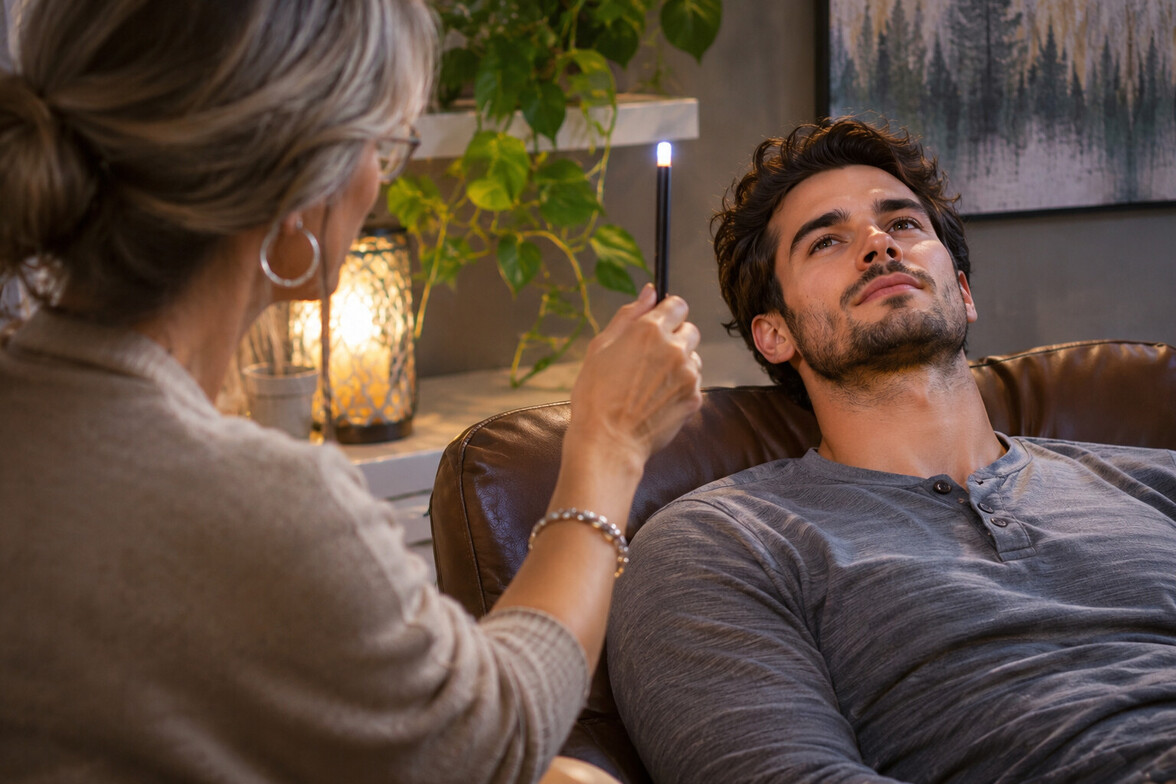
Eye Movement Desensitization and Reprocessing (EMDR) is one of them. EMDR is an evidence-based treatment for PTSD that helps people process distressing memories through a structured therapeutic approach. It often involves guided eye movements or other forms of bilateral stimulation while working with specific memories.
For many people, EMDR can reduce the emotional intensity associated with traumatic experiences.
EMDR is FAST
EMDR is often PERMANENT
EMDR is a GAME CHANGER
Trauma-focused cognitive behavioral therapies are also well-established treatments. These approaches help people examine unhelpful beliefs, reduce avoidance, and develop healthier ways of responding to trauma reminders.
Some therapists also incorporate somatic approaches, which focus on the connection between MIND & BODY. Rather than ignoring what’s happening in the body, clients may learn to notice tension, changes in breathing, or other signs of nervous system activation while practicing regulation skills. Research support varies among specific somatic therapies, but some techniques can be useful alongside established trauma treatments.
You may also have heard about Brainspotting, an approach that uses eye position and focused attention to explore emotional experiences. Although some people report benefits, research on Brainspotting is still developing, and it does not currently have the same level of scientific support for PTSD as EMDR and established trauma-focused cognitive behavioral therapies.
The point isn’t that everyone needs the same treatment. Quite the opposite. Effective counseling should consider your experiences, symptoms, preferences, and goals. What works for one person may not be the best fit for another. And, here’s something I wish more people understood: Good trauma treatment isn’t about making you relive your worst experiences over and over. Excellent trauma treatment is done with good footing in the present.
Healing Doesn’t Mean Forgetting. It Means Living Differently.
Let’s clear up another misconception. Healing from trauma doesn’t mean erasing your memories. It doesn’t mean pretending something terrible didn’t happen. And, it doesn’t require that you forgive people who have hurt you.
Healing means developing a different relationship in your body with what happened. Healing means attaching a different believable story to your pain. Imagine being able to disagree with someone without feeling terrified of rejection. Imagine receiving constructive criticism without immediately questioning your worth. Imagine setting a boundary without drowning in guilt. Or... simply being able to not feel on edge - waiting for the hammer to fall?
For someone whose nervous system has spent years on high alert, these changes can be life-changing. And they often happen gradually. You learn to tolerate discomfort emotions without escaping, attacking, avoiding, or shutting down.
You may just discover something remarkable. The same situations that once sent your nervous system into overdrive don’t have quite the same power anymore. Not because your past disappeared. But because you’ve learned a different way to respond. The story you have attached releases you from feeling that everything is your fault.
Stop Letting Your Past Make All of Your Current Decisions
Here’s a question I want you to seriously consider: "How much of your life are you spending reacting to things that aren’t actually happening anymore?"
How many conversations have you avoided? How many opportunities have you passed up? How many relationships have been affected because your nervous system interpreted discomfort as danger? And, perhaps the biggest question of all: "What might your life look like if those old reactions weren’t making so many of your decisions?"
I believe this is where the real opportunity lies. We cannot change what happened yesterday. We cannot control everything other people do. And we certainly cannot guarantee a life without disappointment, rejection, or emotional pain. However, we can learn how to respond differently. We need a better, but believable story. It is commonly known as "The 3 Bs: "Better, But Believable"
Our brains are capable of change throughout life, a process known as neuroplasticity. Through new experiences, repeated practice, and appropriate treatment, we can strengthen healthier patterns of thinking, feeling, and behaving.
That doesn’t mean healing is quick or easy. It means the patterns you’ve learned don’t necessarily have to be permanent. You can learn to recognize an emotional alarm without automatically believing every frightening thought that follows it. You can learn that noise isn’t always a signal. You can learn to approach situations you’ve been avoiding when doing so is safe and appropriate. And, you can begin making decisions based on what you personally value.
Your Past May Explain You. But It Doesn’t Have to Define You.
At K-Counseling & Anxiety Treatment, we believe meaningful mental health care should go beyond simply identifying what’s wrong. It should help people develop practical skills, understand their patterns, and move toward the lives they want to live.
Our Boise-based practice provides counseling for children, teens, and adults experiencing anxiety, trauma-related concerns, and other mental health challenges. We recognize that people are more than their diagnoses, and that lasting improvement often involves addressing both emotional experiences and everyday behaviors. If you’ve been wondering whether something from your past is still influencing your present, perhaps it’s time to get curious rather than continue pushing those feelings aside.
You don’t have to figure it all out on your own. And, you don’t need to wait until things become unbearable before reaching out. If you’re ready to explore what’s possible, schedule your FREE consultation with K-Counseling & Anxiety Treatment. Let’s find out what moving forward could look like for you.
Educational Disclaimer
This article is for educational purposes only and is not a substitute for professional mental health evaluation, diagnosis, or treatment. If you’re experiencing trauma-related symptoms, consult a qualified mental health professional.